

By: Gauri Harbola
The Story of Fruits: Symbolism of Fruits in Indian Festivals
In India, fruits are much more than something sweet to eat. They are part of the very fabric of Hindu rituals, Hindu offerings, and Hindu traditions. From temple prasad to family celebrations, fruits carry meaning, blessings, and wellness along with flavour. The story of fruits is intertwined with culture, spirituality, and seasonal abundance. Let’s explore the vibrant world of fruit symbolism, the most common festival fruits, and ways to bring these traditions alive in modern celebrations.
Why Fruits Are Special in Hindu Traditions
When you walk into an Indian home during a festival, the first thing you notice may be the colourful arrangement of fruits on the table or in the temple corner. Fruits are considered symbols of prosperity, purity, and divine blessings. Their presence reminds us of health, generosity, and the spiritual values that have been part of our culture for centuries. Whether offered to the Gods, shared among family, or gifted to friends, fruits connect people with both tradition and celebration.
The Story of Fruits in Hindu Rituals
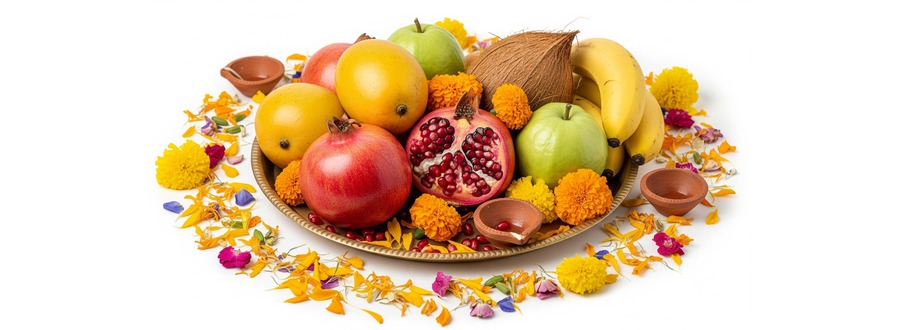
Fruits have held a sacred place in India for thousands of years. The story of fruits in Hindu rituals dates to Vedic times, where they were offered to Gods, Sages, and Ancestors as symbols of devotion. Offering fruits is considered an act of selfless giving and respect. Each fruit carries its own spiritual meaning. For example, coconuts represent the breaking of ego, mangoes stand for love and fertility, and pomegranates symbolise abundance and vitality. Across India, the significance of each fruit can differ slightly, reflecting the country’s cultural diversity and regional flavours.
Fruit Symbolism List: Common Festival Fruits
To understand the role of fruits in Hindu offerings, it helps to look at a fruit symbolism list that explains the deeper meaning behind each choice.
- Mangoes – Often called the “king of fruits,” mangoes symbolise love, blessings, and prosperity. Mango leaves are used to decorate doors and festival entrances to welcome good fortune.
- Bananas – Linked to fertility, purity, and long life, bananas are commonly offered in pujas, and banana leaves serve as eco-friendly plates during celebrations.
- Pomegranates – The many seeds of a pomegranate stand for abundance, fertility, and health. Offering them is a way to wish for wealth and a flourishing family.
- Coconuts – A staple in Hindu rituals, coconuts symbolise selflessness and prosperity. Coconut water is also used in ceremonial bathing of deities.
- Apples, Guavas, and Seasonal Fruits – These fruits vary by region and season and are often included in festival dishes, offerings, and family celebrations.
| Fruit | Symbolism | Festivals/Regions |
| Mango | Love, Prosperity, Blessings | Pan-India, Gudi Padwa |
| Banana | Fertility, Purity, Sustenance | Pan-India, South India |
| Pomegranate | Abundance, Fertility, Health | North India, Shubh Aarambh |
| Coconut | Selflessness, Prosperity | Ganesh Chaturthi, South India |
| Apple, Guava | Seasonal, Regional | Regional festivals |
How Fruits Feature in Hindu Offerings
Fruits are often at the centre of Hindu offerings, whether in temples or homes. During Diwali, Navratri, and other festivals, beautifully arranged fruit baskets are exchanged as symbols of goodwill and prosperity. Traditional offerings like panchamrit include fruits, combining both spiritual meaning and festive abundance. Fruit platters, garlands, and arrangements also serve as stunning centrepieces during family gatherings, adding a visual feast to the spiritual celebration.
Health Benefits of Festival Fruits
While fruits carry deep symbolic meaning, they also serve a practical purpose by nourishing the body.
- Mangoes – Rich in vitamins A and C, they strengthen immunity.
- Bananas – A natural source of potassium and energy.
- Coconuts – Hydrating and packed with electrolytes.
- Pomegranates – High in antioxidants that support heart health.
By aligning festival fruit choices with the seasons, traditional practices naturally promote wellness alongside spirituality.
Regional Variations in Hindu Traditions
Every corner of India celebrates fruits in its own unique way.
- North India: Apples and pomegranates are popular in temple offerings and festive platters.
- South India: Banana leaves and coconuts are indispensable in rituals and celebrations.
- East India: Mangoes and guavas are featured in harvest festivals and as prasad during Durga Puja.
- West India: Mangoes and bananas are prominent in Gudi Padwa and Ganesh Chaturthi.
These regional differences add richness to the story of fruits, making India’s festival scene beautifully diverse.
Modern Ways to Celebrate with Fruits
Fruits can be both traditional and playful in today’s festivals.
You can:
- Create colourful fruit platters or edible centrepieces for your dining table.
- Try fruit-based desserts or festive mocktails inspired by traditional flavours.
- Gift exotic fruit baskets instead of standard sweets.
- Engage children with DIY fruit garlands or fruit-tasting games to make rituals interactive.
- Serve hand– pressed or cold-pressed fruit juice
These approaches bring the story of fruits to life in fun, contemporary ways while respecting the deep spiritual significance.
Conclusion
In Indian festivals, fruits carry a meaning far beyond their taste. They are an integral part of Hindu rituals, Hindu offerings, and Hindu traditions, combining culture, spirituality, and wellness. Embracing fruit symbolism and blending creative, modern approaches keeps festivals lively and meaningful for every generation. Sharing the story of fruits, teaching it to younger family members, and keeping rituals alive ensures these traditions continue to flourish.
FAQ
Why are fruits considered auspicious in Hindu rituals?
Fruits represent purity, abundance, and selfless giving. They are gifts of nature believed to please deities when offered.
Which fruits are most common in Diwali offerings?
Apples, bananas, pomegranates, and coconuts, though regional harvests may influence the selection.
Can modern celebrations include traditional fruit symbolism?
Yes, creative fruit platters, themed desserts, or fruit-based décor can keep traditional meaning alive while adding a contemporary touch.
Are certain fruits linked to specific deities or rituals?
Yes. Coconuts are offered to Ganesha and Lakshmi, bananas to Vishnu, and mango leaves or fruits are used for auspicious occasions, reflecting the deep ties to Hindu traditions.
Latest News & Events

By: Gauri Harbola
Mocktail Recipes for a Non-Alcoholic Diwali Party (with Cold-Pressed Juices)
Read More

By: Gauri Harbola